Built-in marking units
These marking machines, available as built-in or integrated units, are designed for installation in production and assembly lines thanks to their compact and robust construction.
Thanks to a range of options, these stylus, scribe, and dot peen marking systems can be optimally adapted to specific requirements. For example, you can choose from various integrated interfaces such as Profibus and Profitnet, pneumatic or electric Z-axes, sensing devices, or the wide variety of marking heads and marking needles.
Various models and variants of built-in marking machines for stylus, scribe and dot peen marking are also available. We are sure to find the optimal solution for your specific application in our extensive product range, as even the marking field size can be selected.
Our Built-in marking units
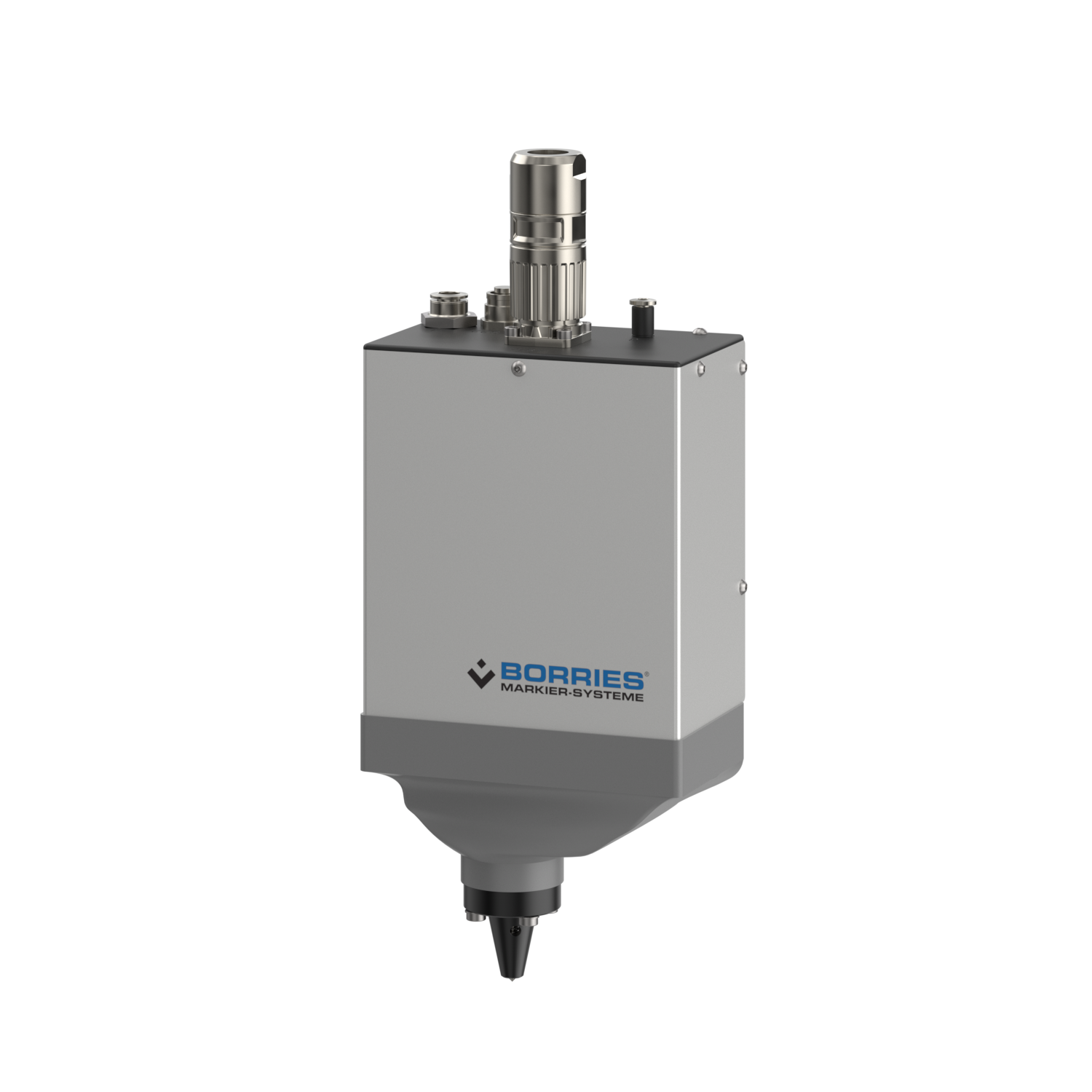
Built-in marking unit 310
Product features of our 310 built-in unit:
- Marking area size 51 x 26 mm (X/Y)
- Marking method: dot matrix marking
- DataMatrix coding (ECC200)
- Compact and lightweight build-in unit for flexible component marking
Options:
- Pneumatic adjustment unit (50 mm, 80 mm or 100 mm stroke)
- Electrical adjustment unit (100 mm stroke)
- Component probing via stylus tip (only in combination with the electrical adjustment unit)
- Covering of the underside of the marker with a dirt cover
Built-in marking unit 310 with cobot
The 310 built-in unit marks components directly on automated production lines using a dot matrix marking process and is suitable for integration with robots, e.g. in welding cells.
Materials: Steel, aluminium, plastic
Marking method: 7 x 5 dot matrix
Font: plain text and DataMatrix code
Features: Lightweight (2 kg) and compact design (120 x 71 x 179.5 mm without marking head)
Optional: Adjustment unit, component touch-on via needle tip, dust cover
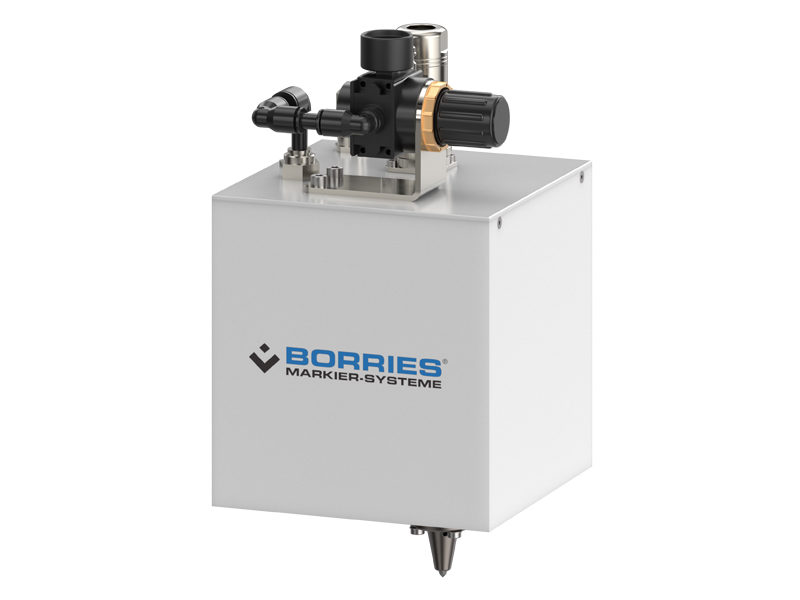
Built-in marking unit 312
Product features of our 312 built-in unit:
- Marking area size 65 x 51 mm (X/Y)
- Various marking methods: scribe, stylus, dot peening and vibropeening
- Data Matrix coding (ECC200)
- Compact and robust built-in unit for component marking
Options:
- Pneumatic adjustment unit (50 mm, 80 mm or 100 mm stroke)
- Electrical adjustment unit (100 mm stroke)
- Component probing using stylus tip (in combination with the electrical adjustment unit only)
- Covering of the underside of the marker with a dirt cover
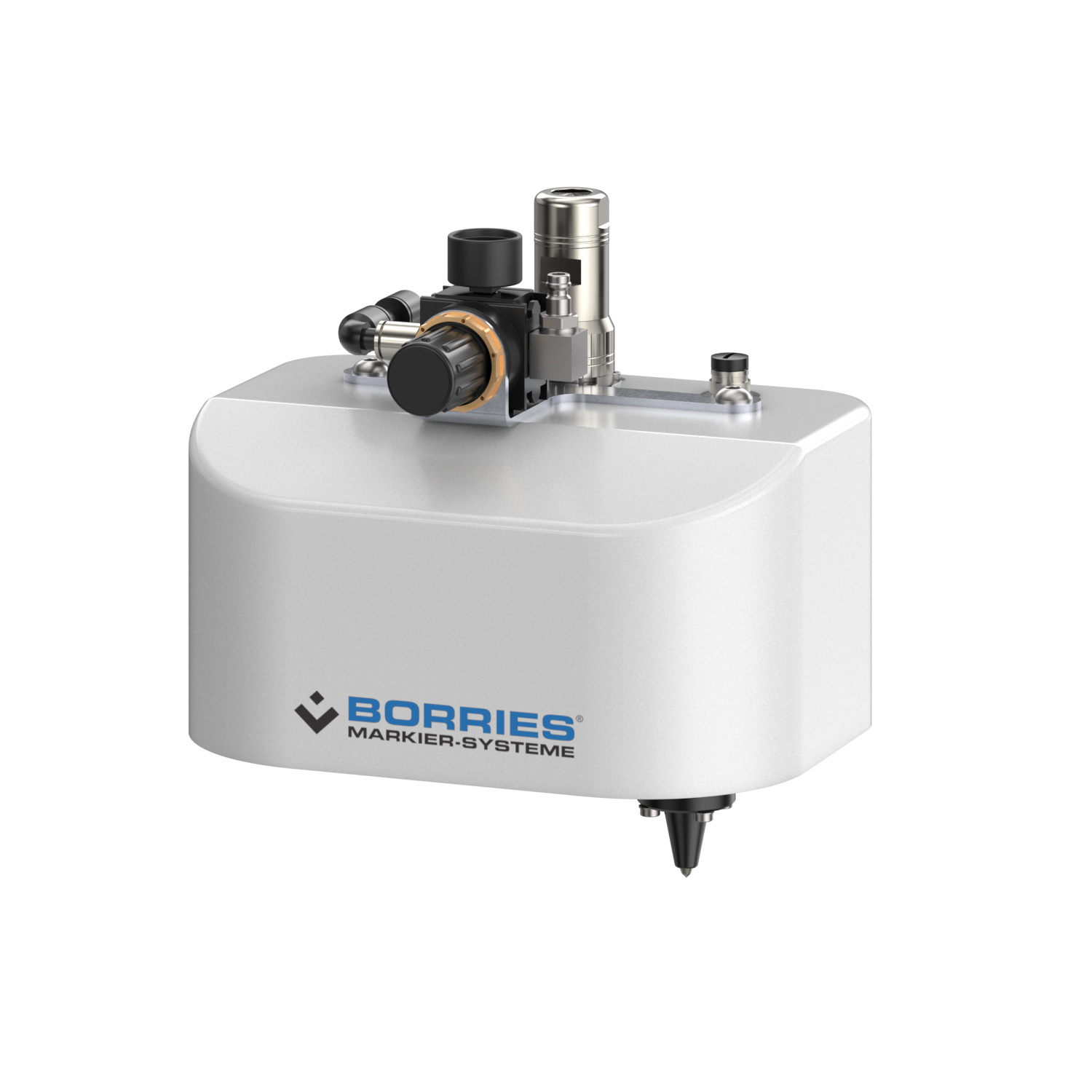
Built-in marking unit 313
Product features of our 313 built-in unit:
- Marking area size 120 x 20 mm (X/Y)
- Various marking methods: Scribe, stylus, dot peening and vibropeening
- Data Matrix coding (ECC200)
- Compact and solid marking unit as incorporation component for flexible component marking
- Robust ballscrews and carriages with revolving ball guides in both axes
Options:
- Pneumatic adjustment unit (50 mm, 80 mm or 100 mm stroke)
- Electrical adjustment unit (100 mm stroke)
- Component probing via stylus tip (only in combination with the electrical adjustment unit)
- Covering of the underside of the marker with a dirt cover
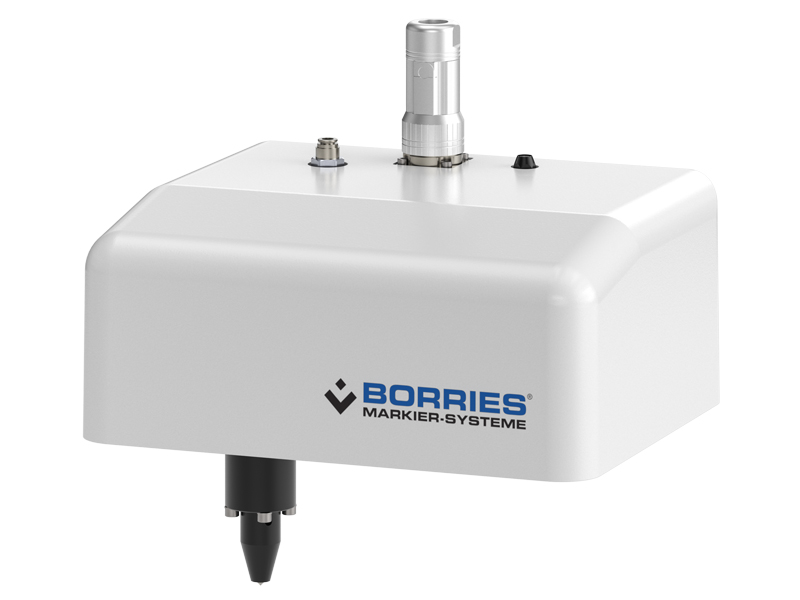
Built-in marking unit 314
Product features of our 314 built-in unit:
- Marking area size 80 x 50 mm (X/Y)
- Independent installation position
- Different marking processes: Scribe, stylus, dotpeening and vibropeening
- DataMatrix coding (EC200) possible
- Powerful, compact and sturdy marking unit for the flexible marking of components
Options:
- Pneumatic adjustment unit (50 mm, 80 mm or 100 mm stroke)
- Electrical adjustment unit (100 mm stroke)
- Component probing via stylus tip (only in combination with the electrical adjustment unit)
- Covering of the underside of the marker with a dirt cover
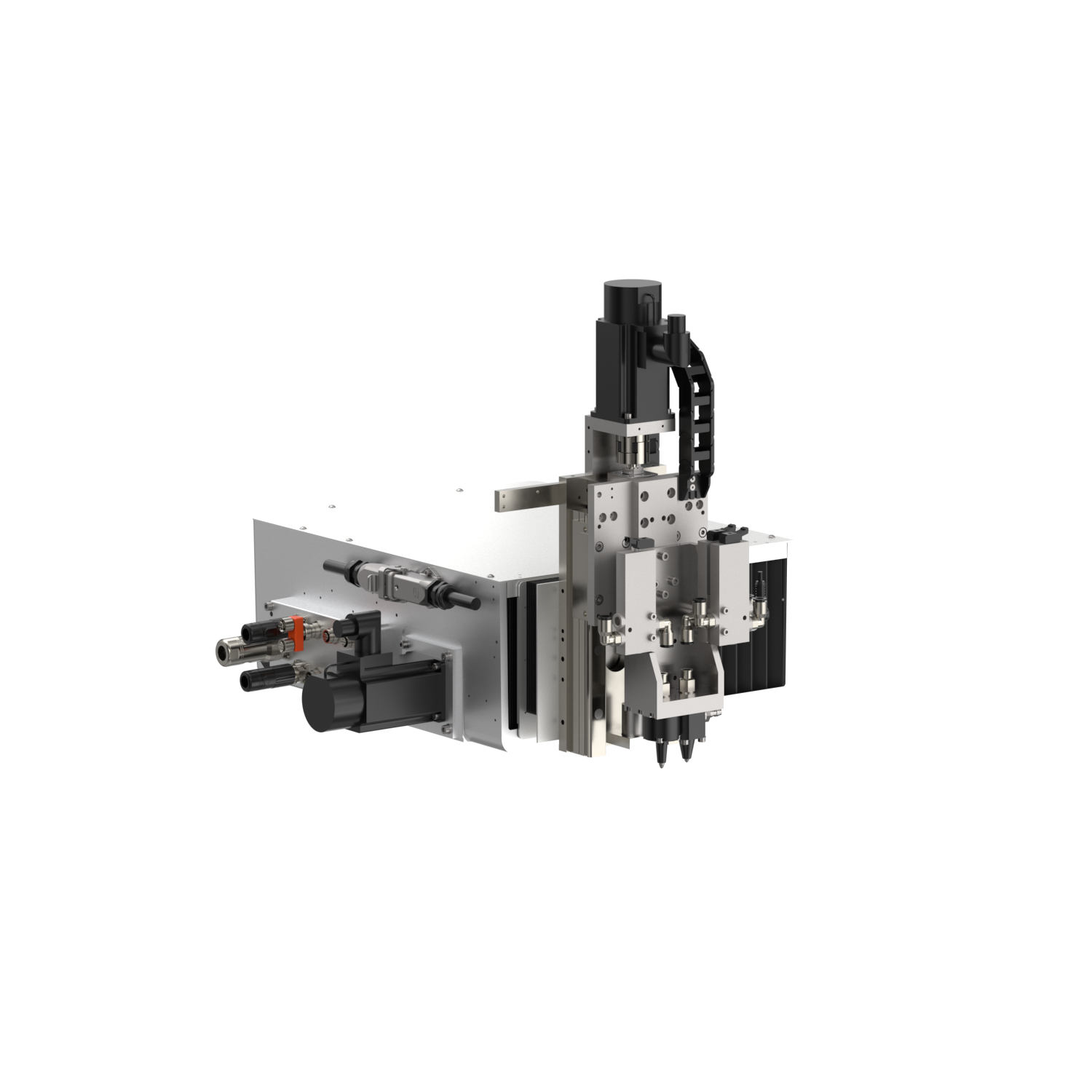
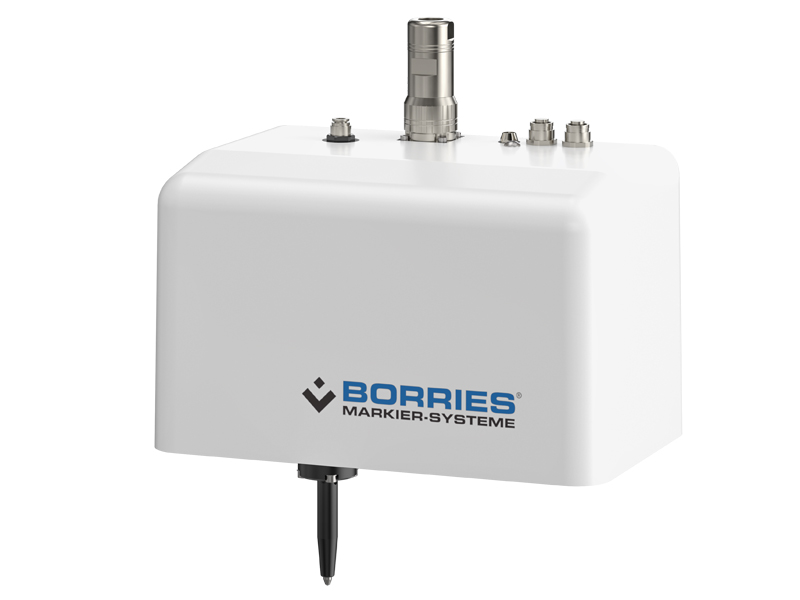
Built-in marking unit 315
Product features of our 315 built-in unit:
- Standard marking area sizes: 150 x 100 mm and 150 x 150 mm (X/Y)
- Custom sizes available on request
- Marking unit for the following marking processes: Scribe, stylus, dotpeening, vibropeening and DataMatrix coding (ECC200)
- The coordinate unit is housed in a robust aluminium casing and is therefore well protected against external influences.
Options:
- Larger marking areas are realised with other designs
- Workpiece touch-on (only in combination with a stepping motor axis)
- Tip query (stylus breakage control for on-site attachment/control)
- Reliable standstill monitoring
- Brake for X, Y or Z axis
- DMC camera
- Relocation of the reference point
Built-in marking unit 317
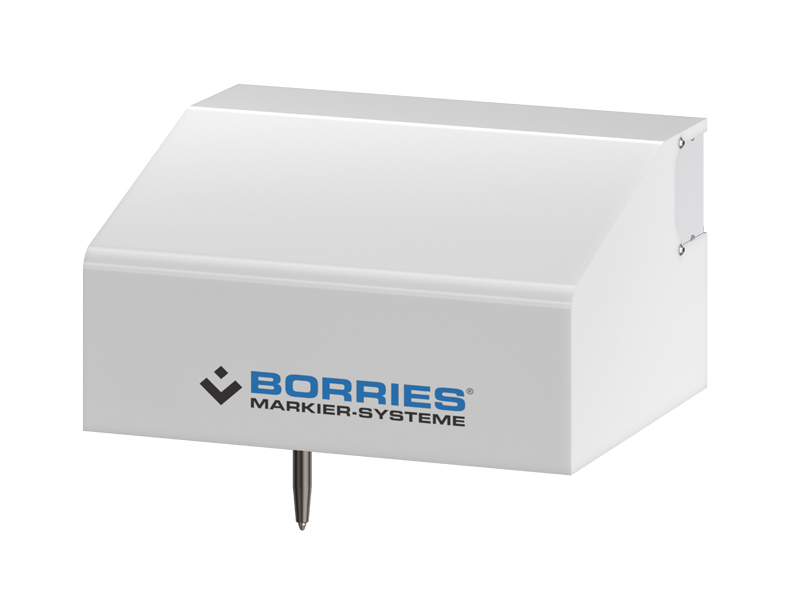
Product features of our 317 built-in unit:
- Marking area size 120 x 25 mm (X/Y)
- Various marking methods: scribe, stylus, dot peening and vibropeening
- DataMatrix coding (EC200)
- High-performance, compact and robust marking unit for flexible component marking
Options:
- Pneumatic adjustment unit
- Electrical adjustment unit
- Surface touch-on (only in combination with an electrical adjustment unit)
Built-in marking unit 322
Product features of our 322 built-in unit:
- Marking area sizes: 40 x 50 mm, 100 x 50 mm, 100 x 100 mm, 150 x 100 mm, 150 x 150 mm, 250 x 150 mm (X/Y) – other sizes available
- Built-in unit for the following marking processes: Scribe, stylus, dot-peening and vibropeening
- DataMatrix coding (EC200)
- Very robust and designed for use in 3-shift operation
Options:
- Cover of the marking mechanism on the
- marking head side with bellows or dirt cover as
- dust protection or sheet metal cover (sheet metal cover is only possible with 100 x 50 mm and 100 x 100 mm)
- Different marking areas
- Electrical adjustment unit (100 mm, 150 mm, 200 mm stroke – optionally with brake)
- Pneumatic adjustment unit (50 and 100 mm stroke)
- Touch-on for dot-peening/DataMatrix marking heads (only in combination with electrical adjustment unit)
- Reliable standstill monitoring (from title block 100 x 50 mm)
- DMC camera
- Relocation of the reference point
Additional downloads for our built-in marking units
How does needle marking work?
Needle marking is a high-precision process for permanently marking materials such as aluminium, steel and plastic, and is used in a wide range of industrial applications. The needle marking machine has a special needle tip made of carbide or diamond, which is driven pneumatically into the material with precise pressure, leaving a permanent mark.
This mark can take various forms, including alphanumeric codes, logos or even DataMatrix codes. The last ones are particularly important in industry for the traceability and identification of products.
The method of needle marking is extremely robust and resistant to environmental influences and changes in temperature, making it ideal for demanding industrial environments.
Precise marking via needle marking plays a crucial role in product tracking, quality control and information security. This technique allows important data to be securely embedded on material surfaces to ensure traceability and authenticity.
Which materials can be marked using a needle marking machine?
- Metals: Metals such as steel, aluminium, stainless steel, copper and brass can be effectively marked using a needle marking machine. These materials are frequently used in industry for a wide range of applications.
- Plastics: Various plastics, ranging from hard plastics to engineering plastics, can be marked using the dot peen marking process. This is particularly useful for making plastic parts traceable or identifiable.
- Wood: Although less common, wood can also be marked using dot peen marking. This is used, for example, in the furniture industry or in the manufacture of wooden packaging.
The flexibility of the needle marking process makes it possible to mark a wide range of materials, whether for traceability, identification, quality control or to highlight specific information on the surfaces of these materials.
What is the difference between scribe marking, needle marking and dot marking?
The terms ‘scribe marking’, ‘needle marking’ and ‘dot marking’ refer to the various methods used to mark surfaces. Here is the difference between them:
- Scribe marking: In scribe marking, a mark is created on a surface by a tool – either a diamond needle or a carbide needle – drawing a permanent indentation or ‘groove’ into the material without lifting the tool. This leaves a permanent mark on the various materials that is clearly visible. Scribe marking is frequently used on metals, plastics and other materials to leave alphanumeric codes, logos or other information.
- Needle marking: Needle marking, which uses a special carbide needle to create a mark on the surface, involves the needle being driven pneumatically into the material at high speed to create a permanent indentation. Needle marking is often used for industrial marking applications to produce durable and clearly legible markings.
- Dot marking: Dot marking is a special form of needle marking. In dot marking, small dots are created in an ordered pattern to represent alphanumeric characters, logos, symbols or DataMatrix codes. The carbide needle is ‘hammered’ pneumatically or electrically at high speed into a wide range of materials. This process is often used to create DataMatrix codes in the automotive industry, the aerospace industry, the steel industry and also in medical technology, as special camera systems ensure the traceability of all conceivable components.