Scribe marker, stylus marker and dot-peen marking machines
Scribe marker, stylus marker, dot-peen marker (for example, for marking a DataMatrix code) and marking machines that use the vibropeening process permanently mark workpieces made of solid materials. These include, in machined or unmachined form, materials such as aluminum, magnesium, steel, stainless steel, plastic, and cast metal. These engraving techniques are used for flexible and fast marking of:
- alphanumeric characters,
- serial numbers,
- part numbers,
- logos,
- Data Matrix codes,
- or other 2D codes.
Using these machines creates a direct, permanent, and tamper-proof mark.
Scribe markers, stylus and dot peen markers offer the advantage of high flexibility in terms of marked text, font height and width, and marking depth. Thanks to the low force required and mechanical tolerance compensation, even solid, hollow, slanted, or curved components can be marked.
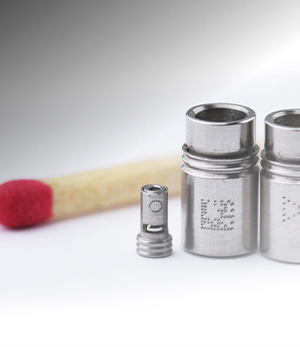
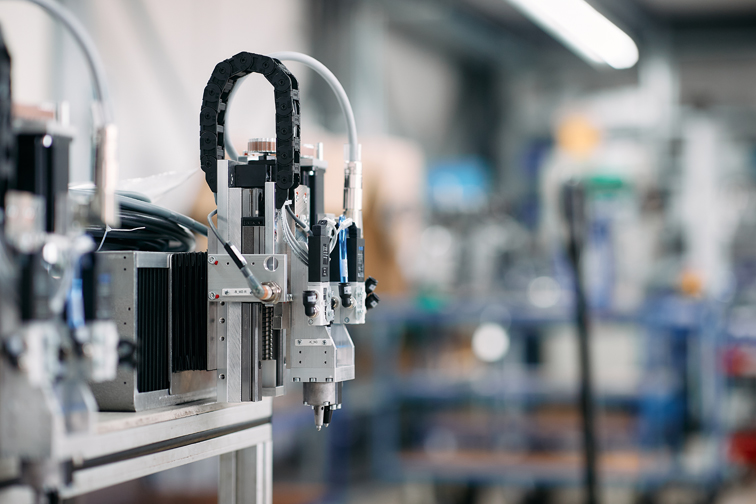
Due to the wide variety of marking machines — including workshop units, portable marking units, and marker as built-in or integrated units — we can handle virtually any marking task.
In addition, BORRIES combination systems are modular in design and can therefore be configured to meet your specific needs. And if you still can’t find the right product in our extensive portfolio, we also have extensive experience in custom machine building.
Which solution is suitable therefore depends not only on what needs to be marked. Other decisive factors include the material and geometry of the component, the desired marking, the accessibility of the marking location, and how the marking is to be integrated into the manufacturing process.
We’d be happy to help you with this.
Our product configurator
Configure your stylus / scribe marker for free:


Marking machines for scribe, stylus and dot-peen marking
Benefits of scribe markers, stylus markers and dot-peen markers:
- User-adjustable character height and width
- User-adjustable stamping depths
- Different character sets / special characters
- Low noise level (scribing)
- Low force (suitable for sensitive workpieces)
- Chipless because of material displacement
- Cost effective standard systems
- individual, custom machinery
Description of the marking processes: scribe marking, stylus marking, dot peen marking, vibro-peening and Data Matrix code
The processes thus differ in the way the marking is created on the surface. Which technique is suitable for a specific application depends, among other things, on the material, the content of the marking, the desired marking depth, the component geometry, and the production process.
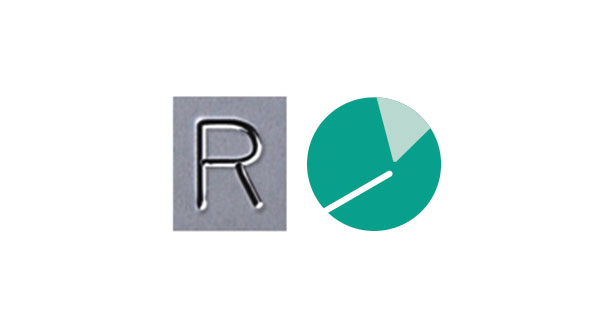
Scribe marking
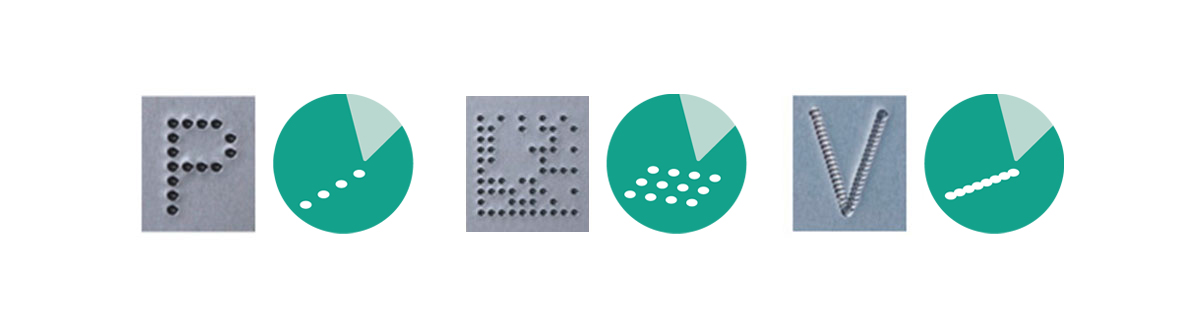
In the case of scribe marking, a diamond or carbide tipped needle is pressed into the surface of the workpiece and drawn through the material. This creates a virtually chip-free, linear mark.
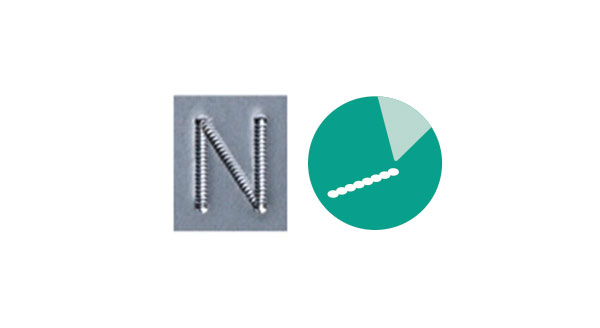
Stylus marking
In the case of stylus marking, a carbide tipped needle is pressed into the surface of the workpiece at a high frequency. The individual impacts create the desired marking. Stylus marking is used in particular for deep markings.
Dot-peen marking, Data Matrix code and vibro-peening
In the case of dot-peen marking, as in Data Matrix and vibro-peening, a carbide tipped needle is pressed into the surface of the workpiece at a high speed. The “crater dots” form legible characters and/or a Data Matrix code. Vibro-peening does that by vibration at high frequenz and placing those crater dots close together. To the eye, this creates what appears to be an almost continuous line. Unlike stylus marking, the compressed air supply is intermittently shut off during vibro-peening. This makes it possible to mark legible characters and a Data Matrix code in a single marking operation.
Why are there different marking systems?
Not every component can be marked in the same way. A small workpiece, for example, can be brought to a stationary marking station and secured there. A large or heavy component, on the other hand, may not be cost-effective or to heavy to transport. In an automated production line, however, marking should be integrated directly into the production process.
That is why there are different designs of marking systems.
At Borries, three basic system concepts are available for this purpose in the field of scribe and stylus marking technology:
built-in units, workshop devices, and portable/mobile marking systems.
The differences do not lie primarily in the marking process itself. They result mainly from where and how the marking is performed and the degree to which the marking system is to be integrated into the production process.
What are scribe and stylus marking systems?
Scribe and stylus, as well as dot peen marking systems are industrial marking machines designed for the permanent marking of workpieces. Among other things, they can apply plain text, serial numbers, logos, and DataMatrix codes directly onto different metal or plastic components.
BORRIES offers cribe and stylus marking systems for a variety of industrial marking tasks.
What is the difference between scribe marking and stylus marking?
When scibe marking, a diamond or carbide tip draws a continuous line into the surface of the workpiece. The process is quiet and produces a visually appealing typeface.
In stylus marking, a carbide needle is driven into the surface at a high frequency. This creates what appears like crater holes. This method is particularly suitable for rough surfaces and greater marking depths.
Both techniques fall under the category of direct, material-removal marking. The marking is created directly on the workpiece and remains permanently bonded to the component.
For which materials are scribe and stylus systems suitable?
Scribe and stylus marking are suitable for nearly all plastically deformable materials. These include, for example, aluminum, steel, stainless steel, copper alloys, gray cast iron, and certain plastics.
The choice of method depends, among other factors, on the material, the surface, and the desired marking result.
What types of marking content can be marked?
Using scribe and stylus marking systems, it is possible, for example, to mark alphanumeric characters, special characters, logos, serial numbers and part numbers. DataMatrix codes can also be marked directly onto the workpiece as a dot matrix.
The font size and width can be adjusted to suit the specific marking task.
How deep can marking be achieved using scribe and stylus marking techniques?
The possible marking depth depends on the material, the marking process used and the marking head employed. With stylus marking, greater marking depths are also possible.
The marking depth is influenced, amongst other things, by the set marking pressure. BORRIES offers a range of marking heads for different performance ranges.
Are scribe and stylus marking systems suitable for DataMatrix codes?
Yes. DataMatrix codes can be marked directly onto the workpiece surface using dot-matrix marking technology. The code can be implemented as an ECC200 and read by a camera.
Positioning accuracy and the distance between the marking head and the workpiece are, amongst other factors, crucial for reliable readability.
Can scribe and stylus marking systems also mark curved workpieces?
Yes. Both scribe and stylus marking can be used on curved surfaces.
The key factors are the design of the marking solution and the alignment of the marking head with the workpiece.
What needs to be taken into account when installing a marking head?
When integrating a scribe or stylus marking system, the entire structure must be sufficiently rigid. Play and elastic movement in the workpiece holder or in the force transmission path can impair the quality of the marking.
Precise positioning is particularly important for DataMatrix codes. For this reason, the marking head, workpiece, holder and machine structure must be considered as a single integrated system.
Are scribe and stylus marking systems suitable for automated production lines?
Yes. Marking units can be integrated into automated production systems. Among other things, workpiece clamping, positioning accuracy and the reaction forces involved must be taken into account during the design phase.
BORRIES offers marking units for integration into industrial production processes.
What is the difference between an embossing machine, a marking machine and an engraving machine?
Customers often use these terms interchangeably. An embossing machine or marking machine produces a mark using a specific, material-deforming marking process; in traditional engraving, material is mechanically removed.
Anyone looking for an ‘engraving machine’ or an ‘engraver’ for industrial component marking therefore does not necessarily require a traditional engraving solution. BORRIES offers alternative methods for the permanent marking of workpieces using scribe (sometimes called scratching) and stylus marking (sometimes called needle embossing) technology.